
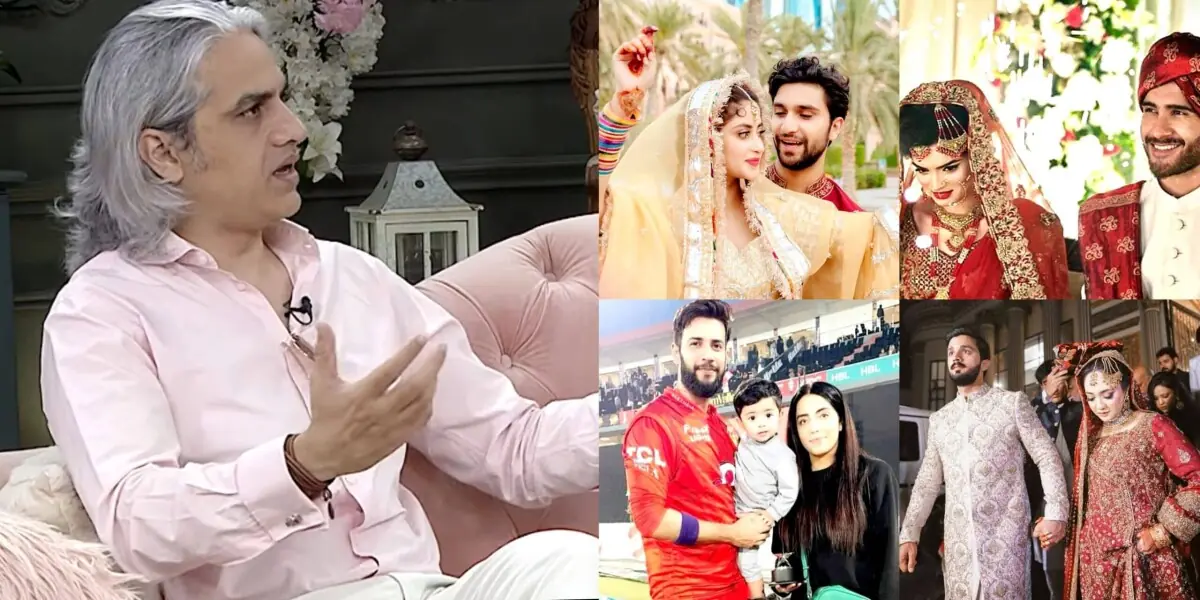
In a society where the grand spectacle of ‘shaadi’ often overshadows all other life milestones, actor Omair Rana has ignited a crucial conversation, peeling back the layers of celebratory fanfare to reveal a profound societal oversight. His recent candid observations highlight what many silently acknowledge: Pakistan’s pervasive obsession with marriage, often pursued with little to no genuine preparation for the lifelong commitment it entails.
The glittering ceremonies, the elaborate preparations, the months of planning – all culminate in an event that is, for many, the ultimate societal benchmark. Yet, as Rana astutely points out, while immense resources are poured into the wedding day itself, a glaring void exists in preparing individuals for the actual institution of marriage. This isn’t merely about financial readiness; it’s about the fundamental ‘training’ required for a successful partnership.
What does this ‘training’ entail? It encompasses a spectrum of essential life skills: emotional intelligence, effective communication, conflict resolution, empathy, understanding boundaries, and the nuanced art of compromise. These are the pillars upon which a resilient and fulfilling marriage is built. However, in a culture that often prioritizes finding a ‘match’ over fostering a ‘partnership,’ these critical elements are frequently overlooked.
The societal pressure to marry, often at a young age, can be relentless. For many, marriage becomes a primary life goal, sometimes eclipsing personal growth, career aspirations, or individual identity. The narrative often dictates that one is not truly ‘settled’ until married, leading to a hurried pursuit of a spouse without adequate introspection or readiness for the responsibilities that follow.
The consequences of this ‘shaadi without training’ are far-reaching. They manifest in strained relationships, disillusionment, and, tragically, in the rising rates of marital discord and divorce. Individuals enter unions ill-equipped to navigate the complexities of shared lives, leading to unhappiness that reverberates through families and communities. The focus remains on the external validation of marriage rather than the internal fortitude required to sustain it.
Rana’s insights serve as a powerful call for introspection. It’s a challenge to society to shift its gaze from the superficiality of the wedding event to the profound substance of the marital journey. It urges a re-evaluation of cultural norms that prioritize pomp and show over genuine preparedness, advocating for a future where individuals are not just married, but are truly ready to build a life together, equipped with the emotional and practical tools for a lasting, harmonious union.